
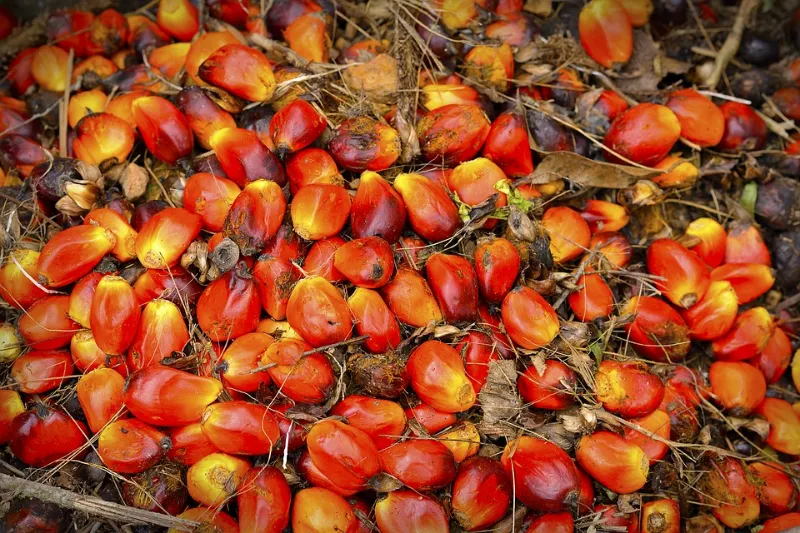
Scientists have found that palm oil reduces the effectiveness of some types of antibiotics.
The resistance of microorganisms to antibiotics is one of the greatest threats of the 21st century. Their growing resistance is an entirely natural phenomenon, but one that is accelerated by the frequent and excessive use of antibiotics. One way of getting rid of resistant bacteria is to use a combination of several drugs. Combination therapy, however, often brings a whole range of undesirable side effects. These can also occur when drugs are combined with certain foods or dietary supplements, which often reduce the effectiveness of medicines. A well-known example is grapefruit and grapefruit juice. In the gut, it suppresses the activity of certain enzymes (CYP3A4), and because of their insufficient activity, much larger amounts of active substances from drugs are absorbed into the body. These can then cause cardiovascular problems and other risks. Some fatty acids interact with food in a similar way, and it was these that the team of scientists focused on this time.
One of the most prominent bacteria, considered a serious global threat because of its ever-increasing resistance, is Staphylococcus aureus.
Growth curves of Staphylococcus aureus strains upon different concentrations of hydrolyzed palm oils or lauric acid ((A) Astrocaryum vulgare oil; (B) Cocos nucifera oil; (C) Elaeis guineensis oil; (D) lauric acid) determined spectrophotometrically. SA Staphylococcus aureus, OD optical density.
Using the in vitro checkerboard method, the scientists tested interactions between oxacillin (a beta-lactam antibiotic of the penicillin class) and palm oils from the tucuma palm (Astrocaryum vulgare), the coconut palm (Cocos nucifera) and the oil palm (Elaeis guineensis) against nine strains of S. aureus. Because gas chromatography identified lauric acid as the main component of all the oils, the scientists also tested its interactions in combination with oxacillin.
The results showed strong antagonistic interactions between the palm oils and oxacillin. Lauric acid subsequently produced similar effects. Everything therefore suggests that combining oxacillin with palm oils and their components may adversely affect the treatment of staphylococcal infections in humans (and animals). This applies both to topical application of the oils (on the skin) and to high-fat diets. And where might you actually come across palm oils? Unfortunately, because they are cheap, they are now found in most products, especially chocolates, biscuits, margarines and savoury snacks.
You can find the full text of the paper here: www.nature.com/articles/s41598-020-80481-0
Lalouckova, K., Skrivanova, E., Rondevaldova, J., Frankova, A., Soukup, J., & Kokoska, L. (2021). In vitro antagonistic inhibitory effects of palm seed crude oils and their main constituent, lauric acid, with oxacillin in Staphylococcus aureus. Scientific Reports, 11(1), 1-12.
Ing. Klára Laloučková, Ph.D.
Co-author of the paper
She completed her doctoral studies in General Animal Science at the Department of Microbiology, Nutrition and Dietetics, FAFNR, CZU Prague, and since 2020 has been an assistant professor at the same department, where she teaches animal nutrition, focusing mainly on dogs and cats. Through the department’s activities and as part of the microbiology laboratory team at the Institute of Animal Science, she works on alternative antibiotic substances in animal nutrition.
Prof. MVDr. Eva Skřivanová, Ph.D.
Co-author of the paper
MVDr., Ph.D. and habilitation at VFU Brno (University of Veterinary Sciences Brno) in Animal Nutrition and Dietetics. Professor at CZU Prague in General Animal Science. Research in animal nutrition and microbiology and in the quality and safety of animal products, focusing on antibacterial substances and their interactions. Teaches the courses Animal Nutrition in Relation to Food, Animal Nutrition, and Nutrition of Dogs and Cats. Member of the Scientific Board of FVHE at VFU Brno and of the Doctoral Board for Animal Nutrition and Dietetics there, and chair of the Doctoral Board for Animal Sciences at CZU Prague.